
Trade Policy Is the Wrong Focus
Prioritising Directed Capital Allocation for Productive Capacity Should Take Center Stage

Preface: There’s been something of a frisson of excitement that Paul Krugman has in recent days come out backing trade tariffs after years of free trade advocacy. This conveniently forgets that Krugman’s own reputation was based on work, decades ago, which showed that — even within the strictures of mainstream economics’ limitations — protectionism, under certain conditions such as imperfect competition, was actually welfare optimising. That Krugman could vacillate on the question of trade shouldn’t really be much of a surprise, for this and other reasons. But the problem with all of this isn’t his credentials or his recent apparent volte face; it’s the fact that the debate is framed in a way that privileges “trade” as the “problem.” In this essay, I argue that this focus misses what really matters; and that’s what happens on the other side of the current account equation … namely, how the capital account is governed and orchestrated. Trade isn’t the culprit; it’s the consequence of decisions made about capital circulation and formation. A refusal to countenance the capital account problem is a function of the politics of finance capitalism.
Contemporary discourse fixates on current account imbalances, casting trade surplus nations as the problem and tariffs or rebalancing demands as the solution. This focus conveniently offshores responsibility. It allows deficit countries — especially the reserve-currency issuer of the advanced western economies — to avoid the harder domestic task of directing capital toward productive capacity formation and structural upgrading. Surplus nations should not be blamed for successfully building capabilities; the onus lies with domestic regimes of accumulation that prioritise financial extraction, consumption, and short-term rents over long-term investment in capabilities and energetic efficiency. In a fiat world, the capital account — not the trade balance — determines trajectory. True adjustment requires confronting internal political economy failures rather than externalising them. Global coordination must align with this to be meaningful.
In her 1973 essay “The Need for a Reconsideration of the Theory of International Trade,” Joan Robinson exposed the deep disconnect between orthodox doctrine and actual economic problems. Standard models assumed full employment, homogeneous factors, automatic balance, and unrealistic mobility conditions. These simplifications, she argued, rendered the theory irrelevant to questions of power asymmetries, technological gaps, unemployment, capital movements and uneven development. Writing just as the post-war Bretton Woods Gold Standard was coming to an end, Robinson insisted that theory must serve real-world concerns such as capability building, structural transformation, and the conditions under which societies reproduce and expand their productive potential. And trade policy (and theory) needs to become more attached to the real circumstances of nations.
More than five decades later, mainstream and even heterodox discussion remains stuck in a sterile framing. Debates over “free trade” versus protectionism, or hand-wringing about current account imbalances (particularly China’s surpluses), miss the central issue. The primary policy focus should not be trade policy in the conventional sense. It should be the explicit direction of capital — domestic and cross-border — toward activities that augment productive capacity, evaluated rigorously by their impact on capabilities and the Energy Return on Energy Invested (EROEI). This was my core point in an earlier essay, in which argued that obsessions with monetary balances was tangential to what really matters. Trade in goods and services can and should remain relatively open, be enabled to function in as smooth a way as possible, particularly when it supports the goals of productive capacity augmentation. You cannot sustainably trade what you do not produce at competitive levels of productivity and systemic efficiency. Capital allocation and utilisation is the decisive lever.
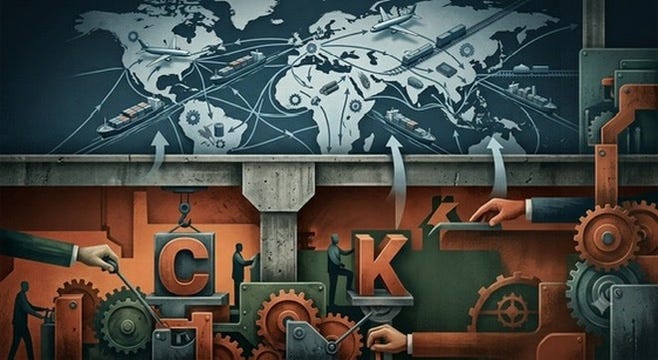
The Poverty of Aggregate Trade and Imbalance Discourse
Orthodox trade theory and many “global imbalances” analyses treat flows as primary drivers rather than reflections or effects. Surpluses are often portrayed as arising from excess savings or domestic distortions (in the trade surplus country) that must be corrected through higher consumption. Deficit countries, especially the reserve-currency issuer, are cast as passive victims. Work in this vein usefully highlights accounting identities — a current account surplus mirrors a capital account deficit, and vice versa — but frequently inverts causality. It suggests prior savings gluts drive export of demand shortfalls. This ignores the Keynesian/ Robinsonian principle that investment creates savings as a residual of expanded income and output. In rapidly industrialising contexts, high savings rates emerge from strong production environments, external demand pull, and capability development rather than acting as the originating distortion. By definition, savings are a residual, not a cause or a constraint.
Furthermore, such framings falter once heterogeneity is taken seriously. Goods, capital, technologies, and sectors are not uniform. An aggregate current account figure reveals little about whether surpluses stem from high-linkage manufacturing ecosystems or low-value resource extraction. Complex global value chains, with intermediates crossing borders multiple times, make bilateral balances even less meaningful. What matters is the composition of flows and their contribution to long-term structural coherence. I had previously discussed the paradox of an appreciating RMB in the context of complex global value chains, whereby the competitiveness of Chinese manufacturers may actually be enhanced by the appreciation of the RMB, as an illustration of this.
Robinson’s critique targeted precisely these simplifications. She rejected models that assumed perfect internal mobility but international immobility, highlighting how real economies involve power, history and uneven capabilities. In today’s fiat currency world, the United States — as issuer of the principal reserve currency — creates USD ex nihilo. It faces no external financing constraint in its own currency. Its trade position is downstream of how those dollars are allocated: toward productive investment and capacity formation, or toward consumption, asset inflation and financial extraction. Persistent deficits reflect domestic political economy choices and vested interests more than external imposition. The US is the author of its own script.
Energetic and Material Foundations: A Thermoeconomic Lens
A capabilities-centred approach must be grounded in biophysical reality. Economies are open, metabolic systems engaged in a constant struggle against entropy. They harness energy, generate surpluses above reproduction needs, and convert those surpluses into order, complexity and resilience. My framework of thermoeconomics and Systemic Exchange Value (SEV), developed in Thermoeconomics in a Time of Monsters, integrates thermodynamics with classical concerns for surplus, production and circulation, anchored by the historic dialectic of entropy-negentropy.
Key metrics include EROEI and “available energy in potential” (net energetic surpluses after reproduction costs). High-surplus systems sustain infrastructure, innovation and social complexity. Declining EROEI or misallocation toward low-productivity activities accelerates entropy — crumbling infrastructure, financial dominance over real investment and systemic fragility are symptomatic. Capital and trade flows should be judged by whether they enhance or erode these foundations. Imports of raw materials, intermediate inputs, or capital equipment are not inherently good or bad; their value lies in their contribution to capability upgrading and improved energetic efficiency. Similarly, capital allocation — whether domestic credit or cross-border investment — must be channeled toward activities that expand net energetic surpluses and negentropic potential.
Pasinetti’s structural economic dynamics reinforce this. In multi-sector systems with differing productivity trajectories and technical progress, aggregate demand management or simple flow rebalancing is inadequate. Policy must attend to sectoral composition, linkages and the conditions for capability diffusion. Heterogeneity means that “free trade” without concerted effort on capacity augmentation can entrench low-capability specialisation, while uncontrolled financial flows can trigger boom-bust cycles that destroy industrial and institutional capacity.
Why the Case for Tariffs Is Weak Today – Hysteresis Risks and the Primacy of the Capital Account
Contemporary enthusiasm for broad tariffs often rests on a superficial reading of history and an overestimation of price signals. In today’s fiat currency environment, the case for tariffs as a central tool of industrial or trade policy is weak. The downside risks — particularly hysteresis effects — are high, while the capital account and the direction of investment remain the primary determinants of long-term economic trajectory and structure.
Hysteresis refers to the lasting, path-dependent damage that temporary shocks or distortions can inflict on productive capacity. Tariffs raise costs for downstream industries, disrupt established supply chains, and create incentives for rent-seeking and inefficiency in protected sectors. Once firms and workers adjust to the new (higher-cost) environment — through reduced investment, skill atrophy, supplier exit or relocation — the negative effects can become self-reinforcing and difficult to reverse. In heterogeneous capital contexts, where machinery, skills, networks and institutions are specific and complementary, these contractionary pressures do not automatically call forth superior domestic alternatives. Instead, they risk locking economies into lower-productivity states, with reduced innovation, narrower capabilities and diminished energetic surpluses over time.
Unlike the gold-standard era, where tariffs could directly support reserve conservation and ease liquidity constraints in a contractionary global environment, modern tariffs in a fiat world lack that particular macroeconomic rationale. They operate mainly as domestic price interventions and redistribution mechanisms. Without robust capital orchestration — directed credit, performance-conditioned incentives, public investment and strategic channeling toward high-EROEI activities — tariffs tend to impose broad cost increases while delivering limited structural gains. The capital account, encompassing both domestic credit creation and cross-border financial flows, is what ultimately shapes investment, capacity formation and technological trajectories. It dictates whether resources flow into productive renewal or into financial extraction, consumption binges or low-impact activities.
Robinson’s critique of orthodox trade theory remains salient: elegant price-based models ignore the real difficulties of structural transformation. In a world of complex supply chains, energetic constraints and monetary sovereignty (especially for reserve issuers), the capital account is the decisive circuit. Managing and directing it — through macroprudential tools, industrial strategy, public development banking and selective openness — offers far greater leverage than tariff policy alone. Tariffs may have niche, time-bound roles in strategic sectors with clear sunset provisions and investment requirements. But as a general instrument, they carry high hysteresis risks and weak transformative power.

The Politics of Current Account Obsession – Offshoring Responsibility, Heterogeneity and the Need for Upgrading-Focused Recycling
As argued, a notable feature of contemporary trade and imbalance discourse is its heavy emphasis on the current account. Surplus countries (especially China) are routinely cast as the primary disruptors, while deficit nations position themselves as victims requiring redress through tariffs, rebalancing demands, or “fair trade” negotiations. This focus is politically convenient. It allows policymakers in deficit countries — particularly the reserve-currency issuer — to offshore responsibility for domestic shortcomings. Rather than confronting vested interests in financialisation, underinvestment in productive capacity, persistent austerity or distributional failures at home, attention is directed outward. The current account becomes a convenient scapegoat, absolving the need for difficult internal reforms such as directed capital allocation, public development financing or capital controls to channel resources productively.
This political dynamic obscures the capital account’s central role. In a fiat world, the capital account (domestic credit creation and cross-border flows) shapes investment, capacity formation and structural outcomes far more directly than trade balances alone. Obsessing over current account rebalancing often serves as a substitute for getting tough on domestic capital — reorienting credit toward high-EROEI activities, infrastructure, skills and technological upgrading. It also avoids mechanisms that could productively recycle surplus nations’ accumulated savings.
John Maynard Keynes recognised this asymmetry in his proposals for the international monetary system as negotiations began for a post-war financial architecture. In advocating the Bancor and an International Clearing Union (on which see my earlier essay), Keynes argued that both surplus and deficit nations should share adjustment burdens. Surplus countries were not to be forced into contraction of their productive capacity, an outcome that would be globally contractionary. Instead, the system should incentivise them to recycle surpluses through productive investment in deficit nations, supporting demand and capacity expansion where needed. The goal was symmetric adjustment that preserved global demand and encouraged development.
Today’s discourse often inverts this logic. Surplus nations are being pressured rhetorically at least, to boost consumption and reduce surpluses, while deficit countries resist meaningful capital account reforms or public investment strategies. A myriad of barriers are also erected hampering the meaningful recycling of surplus money capital, often these days citing “national security” concerns and from time to time variants of racial dog-whistling on “foreign ownership.” This is not neutral economics. It is politics by other means, shifting blame while protecting domestic rentier interests and avoiding the harder work of orchestrating capital toward long-term productive ends.
Luigi Pasinetti’s structural economic dynamics add an important layer here. Because capital and production are heterogeneous — different sectors have distinct technical coefficients, productivity trajectories, linkages and learning potentials — simple capital recycling is insufficient. Investment from surplus to deficit nations must be upgrading-focused, directed toward activities that enhance capabilities, raise systemic EROEI and contribute to structural transformation rather than merely propping up existing (potentially low-productivity) patterns. Without attention to heterogeneity, recycled capital can reinforce path dependencies instead of fostering the dynamic reallocation and technical progress that Pasinetti emphasised as essential for sustained growth and full employment.
A capabilities-centred approach, grounded in Robinsonian insights and thermoeconomic realities, rejects this evasion. The capital account — broadly understood to include domestic credit direction and selective international recycling — must be actively managed to support upgrading. Effective policy requires explicit commitments to channel capital (public, private and foreign) into activities that expand energetic surpluses and structural resilience. Offshoring responsibility via current account narratives merely delays the necessary domestic reckoning and international coordination that true Keynesian symmetry would demand.
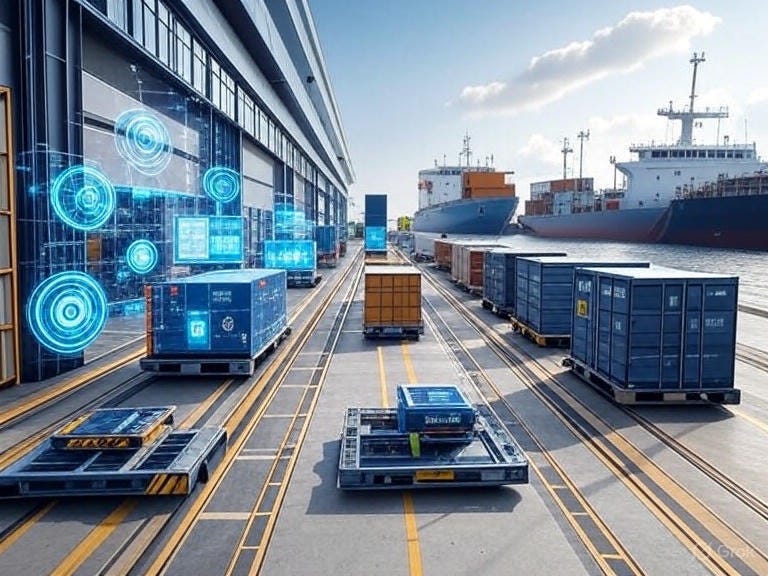
Reframing Policy: Free(ish) Trade + Directed Capital Allocation
The sterile binary of free trade versus protection should be abandoned as touchstones. A superior principle is free(ish) trade in goods and services, combined with explicit mechanisms to direct capital toward productive capacity formation. This is not traditional cross-border capital controls alone, though those remain useful for managing speculative volatility. It encompasses a broader suite of tools — directed credit, industrial policy, performance-conditioned incentives, openness to foreign direct investment and technology transfers, public procurement and regulatory guidance — all evaluated by their measurable impact on capabilities and EROEI.
Free(ish) trade reduces unnecessary frictions on real exchange. I say free(ish) because there is no such thing as absolutely “free” when it comes to the circulation system, whether it is within a set of national borders or across borders. There are standards and rules; there are payment systems to navigate; there are certificates to present etc. So-called “free trade” is a function of a myriad of rules and regulations, which shape the possibilities of cross-border exchange and the conditions of its success. On the other hand, tariff and related barriers are redistributive mechanisms that add costs to a wide cross section of communities. Access to imported inputs, capital equipment and knowledge supports domestic production possibilities and competitive discipline. In fragmented supply chains, smooth goods flows enable dynamic specialisation based on evolving capabilities rather than static endowments.
Directed capital allocation is the core governor. It ensures that credit and investment — whether domestically generated or attracted from abroad — flow into activities that expand productive potential, improve energetic efficiency and strengthen systemic resilience. This may involve imports of intermediates or machinery where they raise overall EROEI and capability levels. China’s recent boom in exports, on the back of expanded global demand (mainly from the global south) for machinery and equipment, capital goods, robotics, clean energy generation and storage systems etc., is just such a case. This approach explicitly rejects the notion that capital should chase the highest short-term financial returns regardless of real economy consequences. Vested interests benefiting from financialisation or low-effort import reliance must be countered through institutional design. Put the other way, an absence of effective capital directionalisation and orchestration in the U.S., and in Europe as well, has been a primary contributor to the hollowing out of its day-to-day industries over the past few decades.
This combination of free(ish) trade and capital management is pragmatic rather than dogmatic. Robinson would have recognised its consistency with avoiding beggar-thy-neighbour spirals while prioritising active strategy for employment and structural change. In a fiat world with expanding global trade, the risks of contractionary imbalances are transformed. The focus shifts to whether flows augment or dissipate energetic surpluses and long-run viability. Robinson’s 1973 essay drew on her other famous piece on beggar-thy-neighbour policies in the inter-war years, but it’s important to recall that the risks of international conflict arising from trade imbalances at that time took place in conditions where settlements presupposed gold reserves, in an era of global contraction. These are simply not analogous to today’s conditions, as I have discussed previously.
For the United States (and, indeed, the European Union), the implications are direct. Monetary sovereignty provides extraordinary space. The constraint on reshoring manufacturing, infrastructure renewal, or energy transition is not external but internal: namely, political choices that favour existing circuits over disruption. Directed capital mechanisms could redirect ex nihilo dollars — and therefore, mobilise real resources — toward high-EROEI investments without sacrificing beneficial, and indeed necessary, trade linkages. The “problem” of the US trade position is, at root, one of domestic politics and coalition interests revolving around latter-day rentiers. It isn’t a problem of Chinese household savings.
When folk speak of a “China Shock,” this is deflection from what can be better described as the Revenge of the Rentier.
From Trade Policy to Capacity Policy
Trade policy debates miss the point because they elevate exchange over production. You cannot sustainably export (or absorb imports) without underlying capabilities. The real priority is capital direction — domestic and selective international — oriented toward capacity formation, judged by impact on productive structure, its overall upgrading and systemic energetic efficiency. This thermoeconomic and structural lens integrates heterogeneity, investment-savings causality and material foundations. It involves free(ish) trade particularly where it serves capability augmentation; directed capital to ensure financial claims support, rather than undermine, the metabolic reproduction of the system.
Rejecting free(ish) trade is a lazy cop-out when the hard work of bringing finance capital to heel is what’s required.
The priority should be clear: relatively open trade in goods and services fostered in ways that augment capabilities, paired with deliberate capital direction to ensure that financial claims serve the material and energetic foundations of long-term reproduction and progress. The capital account, not the trade account, is where the real structural battle is won or lost.
In an era of energetic transitions, geopolitical fragmentation and eroding energetic surpluses in legacy systems, this shift is essential for long term national economic wellbeing. It may also be essential to staving off social entropy. Aggregate money imbalance narratives and ideological trade rhetoric obscure biophysical and structural realities. A capabilities-first approach, with capital allocation as the central lever, provides coherent guidance. Societies thrive not by obsessing over trade balances, but by deliberately converting energetic surpluses into sustained order and progress.
Great essay Warwick - goes to the heart of the dilemmas facing 'the west' today.
Essentially rich & powerful nations have got to accept that prosperous 'productive trade' is unachievable unless overall transactions advance domestic national welfare of both the exporter and importer.
The essential problem panning out for 'the west' is that global trade has been pacticed by the powerful as just a further means of callous wealth extraction from the vulnerable powerless. Ravenously extractive global capital movement has long eclipsed real trade settlement volumes which currently compose somewhere in the range of 1.5% to 10% of total annual foreign exchange volumes.
Info from an AI query - " [Keynes Bancor] Symmetrical Adjustment Mechanism:
1- Countries with trade deficits would be encouraged to adjust by devaluing their currency or stimulating exports.
2- Crucially, countries with trade surpluses would also be required to adjust by either expanding imports, revaluing their currency, or investing surplus funds internationally.
Incentives to Limit Surpluses: Keynes proposed charging interest [5%] on excessive surplus balances held in the ICU [International Clearing Union] accounts. This was to discourage countries from hoarding surpluses and to incentivize them to take steps to reduce their surpluses...
3-Shared Responsibility:
Keynes emphasized that both deficit and surplus countries bore responsibility for correcting imbalances, promoting a cooperative and fair system..."
In fact China has consistently, annually re-invested a significant portion of its annual trade surplus into foreign nations in the form of the BRI - developing remote port & transport facilities to assist expansion of foreign import & export volumes.
I suggest that China (without explicit direction) has more than met Keynes criteria 2 & 3 above.
Contrast & compare with the US/IMF/World Bank's parasitic manipulation of global finance & trade since the 1900's.
Again from AI query;
"..China Belt and Road Initiative (BRI) infrastructure investments:
Total BRI infrastructure investments from 2013 to 2022 are estimated around $679 billion [USD] in cumulative terms.
This implies an average annual BRI investment of roughly $60-70 billion.
Estimation of Annual Percentage: If we take a rough average trade surplus over the last decade to be around $500 billion annually (a conservative estimate given growth), and average annual BRI investments at about $65 billion:
Percentage of trade surplus re-invested in BRI=65bn/500bn = ~ approx 13%
Interpretation:
Approximately 13% of China’s external trade surplus per year might be invested in BRI infrastructure projects abroad..."
China's trade surplus re-investment rate of 13% is significantly more than that (5%) proposed by Keynes and it promises to greatly expand many developing nations capacity to both import & export.
IMHO China has proved to be a very astute macroeconomic operator - it has learned lessons well from observing the west's blatantly extractive economic/trade debacle.
China is playing the long game - it will be still going strong after 'the west's' hegemonic self-demolition smoke clears.
Yes! "explicit direction of capital" - follow the money!
The U.S. could, but does not, create its currency ex nihil - it is by law tied to issuing an equivalent amount of debt - thus, their huge national debt. The have sucked in the savings of the world while due to no actual productivity, are not able to pay the interest.
Yes, there can be no case for tariffs - goverments should let go of trade. I pity a trade lawyer, trying to keep up with the exponential increase in trade "agreements."
That is a great sentence: "It is politics by other means, shifting blame while protecting domestic rentier interests and avoiding the harder work of orchestrating capital toward long-term productive ends."
This one here is the big problem: "Directed capital allocation is the core governor. It ensures that credit and investment — whether domestically generated or attracted from abroad — flow into activities that expand productive potential, improve energetic efficiency and strengthen systemic resilience."
The oligarch class in USA will ALWAYS demand liquidity flows uphill - to them, not to productive uses. This you answer with this sentence: "The “problem” of the US trade position is, at root, one of domestic politics and coalition interests revolving around latter-day rentiers. It isn’t a problem of Chinese household savings."
and: "Rejecting free(ish) trade is a lazy cop-out when the hard work of bringing finance capital to heel is what’s required."
- to which I say, good luck with that! However, America must choose - do this or endure long-term poverty.
Now here is my main concern for China at this time. No, I do not want to see an answer to this, it is strictly an internal matter, and other nations seem to be too stupid to see the problem, so let them suffer. China must figure out how to adjust its ports to accommodate sea-level rise, or find themselves trapped.